
Stair Climbing Dolly: Transporting Kitchen Countertops, Marble, and Other Building Materials
Different scenarios will have different requirements for the application of the stair climbing trolley. And what items the electric stair climbing dolly is adapted to carry up and down the stairs.
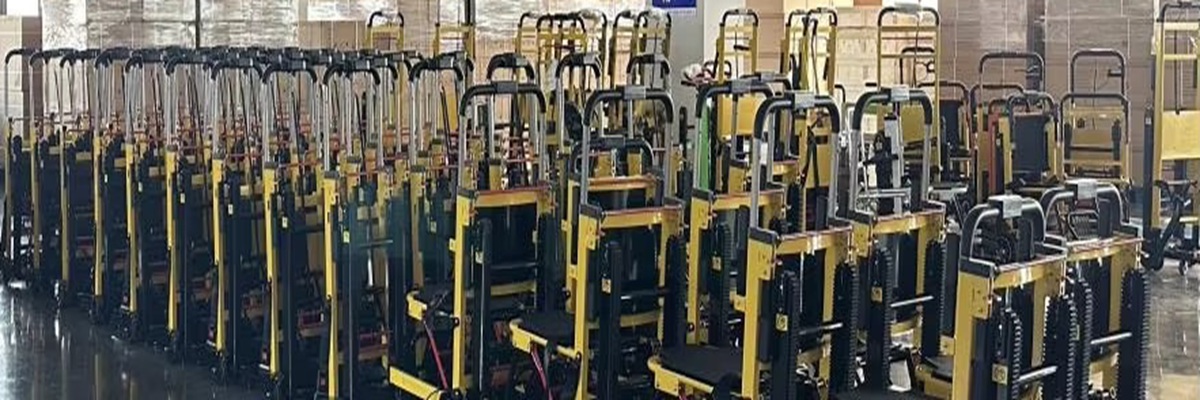
First, what objects are suitable for electric stair climbing dollies?
We mainly carry cement, sand, tiles, marble and other heavy building materials upstairs.
We mainly carry refrigerators and freezers, air conditioners, washing machines, TVs, sofas, closets, cabinets, bathrooms, etc. up and down stairs.
- Some special products
Liquefied petroleum gas tanks, medical equipment, etc.
- Water delivery industry
Cases of liquor, cases of goods.
Optional accessories
To adapt your climbing needs to different environments, you can make your transportation easier by purchasing the following optional add-on accessories:
- Box Accessories
- Gas cylinder accessories
- Bottled water accessories
- Heightened accessories
- Widening accessories
- etc.
What convenience do electric stair climbing dollies offer us?
First, they help reduce employee fatigue because they require less physical effort than traditional hand trucks and carts. This means employees will be able to transport heavier loads with less physical effort, resulting in fewer injuries due to overexertion or improper lifting techniques.
Overall, the use of electric stair climbing dollies can improve the safety, efficiency and cost savings of company.
The stair climbing dolly’s non-slip loading platform can stably support the kitchen countertop, and the elastic fixing straps can reinforce it horizontally, reducing slipping caused by vibration during transportation.
It can transport building materials such as ceramic tiles, boards, cement bags, door and window frames, and pipes, meeting the multi-scene transportation needs in decoration and engineering construction.
The stair climbing dolly’s non-slip loading platform and protective splints can prevent scratches caused by slipping. In addition, it is recommended to stick protective film on the edges and corners of the materials before transportation to further reduce the risk of collision and damage.